
Executive transportation operates within a professional environment where privacy, timing accuracy, and controlled interaction are expected standards. In cities like Vancouver, where corporate activity intersects with international travel, finance, legal services, and technology sectors, transportation frequently becomes an extension of executive operations.
Confidentiality and discretion are not incidental benefits. They are structured components of professional ground transportation systems.
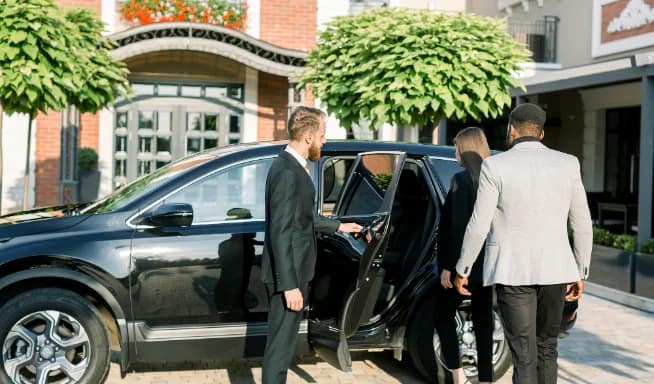
Privacy as a Structural Requirement
Executive travel often includes confidential conversations, document review, and schedule coordination involving sensitive information. Maintaining discretion requires more than a quiet vehicle. It requires procedural, environmental, and operational controls.
Professional executive transportation integrates privacy safeguards into every stage of service, from reservation to arrival.
Controlled Information Flow
Limited Disclosure of Travel Details
Transportation logistics are handled with restricted information access. Pickup locations, passenger names, and destination details are managed through controlled dispatch systems to reduce exposure.
Information is shared strictly on a need to know basis within operational channels.
Secure Communication Protocols
Scheduling adjustments and route updates are communicated through secure and direct channels rather than open or informal messaging systems. This reduces the risk of unintended information distribution.
Clear communication structure prevents operational leakage.
Vehicle Environment and Physical Privacy
Interior Cabin Separation
Executive vehicles are configured to provide spatial separation between driver and passenger areas when appropriate. Tinted windows and controlled cabin acoustics reduce visibility and outside intrusion.
The interior becomes a controlled environment rather than a public space.
Sound Containment and Noise Management
Road noise and external distractions are minimized to allow private conversation. A quiet cabin reduces the likelihood that discussions are overheard when windows are closed and doors are sealed.
Environmental control supports conversational privacy.
Chauffeur Conduct and Professional Standards
Training in Professional Boundaries
Chauffeurs operating in executive environments are trained to maintain neutral presence. Conversation is limited unless initiated by the passenger. Observational discretion is expected as part of professional conduct.
Behavioral consistency reinforces trust.
Confidentiality Awareness
Professional drivers understand that exposure to conversations or documents does not imply participation. Awareness of confidentiality expectations is embedded in operational culture.
Discretion is demonstrated through restraint rather than engagement.
Route Planning and Exposure Reduction
Avoiding Unnecessary Stops
Structured route planning reduces exposure to crowded public pickup zones or unpredictable stops. Direct routing minimizes visibility and time spent in high traffic areas.
Controlled movement lowers the probability of unwanted interaction.
Adaptive Routing for Privacy
If required, routing can be adjusted to avoid public congestion, media presence, or high exposure zones. Flexibility supports privacy preservation under changing circumstances.
Route control becomes a privacy mechanism.
Arrival and Departure Protocols
Coordinated Curbside Management
Pickup and drop off procedures are timed to reduce waiting in visible areas. Efficient curbside transitions limit public attention and streamline movement between vehicle and building.
Precision reduces unnecessary exposure.
Building Access Familiarity
Familiarity with private entrances, loading zones, and restricted access areas supports discreet arrival and departure.
Knowing the physical environment contributes to confidentiality.
Data Handling and Reservation Security
Secure Booking Systems
Executive transportation often involves reservation platforms that restrict access and log changes systematically. Controlled systems reduce the risk of unauthorized modification or data exposure.
Digital security complements physical discretion.
Limited Data Retention
Operational data is retained according to policy rather than indefinitely. Structured data management prevents unnecessary exposure of historical travel patterns.
Responsible handling extends beyond the journey itself.
Professional Presentation Without Attention Seeking
Discretion is also expressed through understated professionalism. Vehicle presentation, chauffeur attire, and operational behavior are polished but not attention seeking. The goal is to blend seamlessly into corporate environments rather than draw notice.
Visibility is managed without compromising quality.
Confidentiality as a Continuous Process
Confidentiality in executive transportation is maintained through layered safeguards: information control, trained conduct, route planning, secure communication, and structured arrival protocols. Each layer reinforces the others.
In executive travel environments, discretion is not a single feature. It is the result of coordinated operational discipline applied consistently from reservation through arrival.